
Hi friends!
I bet you've all heard at least one thing about Florida Amendment 3 (2026) now that the election is over! With the upcoming Florida property tax changes in 2027, I've heard misinformation, skepticism, and plenty of positive feedback about what this could mean for Florida residents.
Keep reading to get a better understanding of what this actually means, how it affects Florida residents, and how we can make it practical through future real estate closings while everyone is still ironing out the details.
So… what was Amendment 3's purpose? What was it trying to accomplish?
In simple terms, due to increasing property taxes, this amendment was introduced to increase the homestead exemption for qualifying Florida residents, ultimately reducing the taxable value of their homes for non-school property taxes.
Here's the breakdown:
2027: The homestead exemption increases to $150,000 of assessed value for non-school property taxes.
2028: That exemption increases again to $250,000 of assessed value for non-school property taxes.
2029 and beyond: The exemption amount will be adjusted for inflation.
Now, an important distinction: this does NOT mean your entire property tax bill is reduced by a guaranteed 5–10%. The additional exemption applies to non-school taxes only. School district taxes are treated separately, and the existing $25,000 school-tax exemption remains.
Also, special assessments (think certain services and improvements such as stormwater, sewer, and other specially assessed services) are not eliminated by this exemption.
Think of it as a nice belated Christmas present! Just remember that your actual savings will depend on your property's assessed value and the applicable tax rates.
Source: Florida Department of Revenue, Property Tax Oversight Informational Bulletin PTO 26-21 (November 5, 2026).
And wait… there's more!
The amendment also changes the annual assessment cap for non-homestead properties from 10% to 5%.
What does this mean? Second homes, investment properties, and other qualifying non-homestead properties may benefit from a lower cap on annual assessed-value increases.
This is separate from the increased homestead exemption, so it's important not to mix the two up!
What the heck are the residency requirements?
The question we're all asking!
Well, this is where things get a little more interesting. One of the biggest questions surrounding the Florida homestead exemption for new homeowners is how residency impacts eligibility, especially for those relocating to Florida after 2026.
If you maintained Florida permanent residency on or before December 31, 2026, you may qualify for the increased exemption beginning in 2027, provided you meet the other homestead requirements.
Even if you haven't purchased your Florida home yet, establishing Florida residency by that date is important.
Now, what if you're moving to Florida AFTER December 31, 2026?
You aren't necessarily out of luck! The amendment provides a different exemption structure for new Florida residents. You can still qualify for a homestead exemption, but initially, the exemption is limited to $25,000 for school taxes and up to $50,000 for non-school taxes. The increased exemption becomes available beginning with the fifth year of exemption, subject to the constitutional requirements.
So, no, you don't lose the ability to file for homestead just because you're a newer Florida resident. The amount of the exemption is what changes.
Source: Florida Constitution, Article VII, Section 6, as amended by Amendment 3; Florida Department of Revenue, PTO 26-21.
HALT! Who actually qualifies?
Please note that the increased homestead exemption ONLY applies to qualifying homestead properties.
Second homes, investment properties, commercial real estate, and renters will NOT be eligible for the increased homestead exemption.
However, qualifying non-homestead properties may benefit from the reduced annual assessment cap we discussed above.
Remember that in Florida, homestead is tied to your permanent residence, not simply a property you own. You cannot claim multiple homestead exemptions on multiple properties.
This is also important for married couples to understand. Florida's homestead rules generally treat a married couple's permanent residence as one marital homestead, rather than allowing each spouse to claim a separate homestead exemption on a different property.
Source: Florida Department of Revenue – Property Tax Exemptions
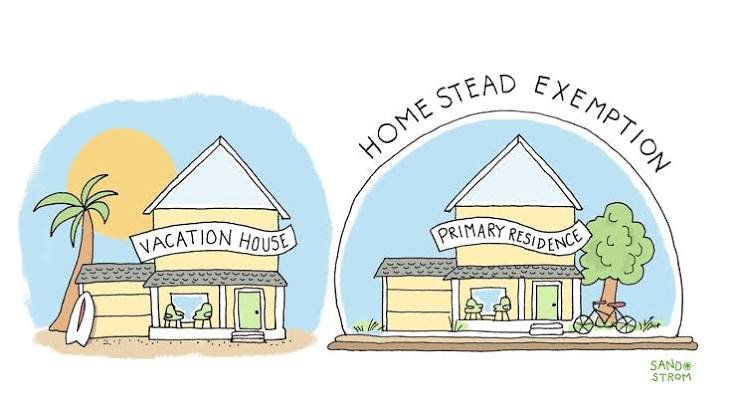
Photo source: Institute on Taxation and Economic Policy – How Can Cities and States Reduce Property Taxes for Homeowners and Renters?
Does this affect real estate closings?
It 100% could, but not necessarily in the way you may think!
Through a standard real estate closing, property taxes are prorated based on the closing date and the terms of the contract. The buyer will generally receive a credit at closing for the seller's portion of the taxes, since the buyer will typically be responsible for paying the full tax bill when it becomes due.
Florida property tax bills are generally mailed in November, with November 1 being the beginning of the collection period.
The TRIM (Truth in Millage) notice is typically released in August, although the exact timing can vary.
Back to proration credits - if you can't tell, I tend to tangent, and since title is such a passion of mine, I have to rein myself back in!
So, how do we prorate taxes based on an amount we don't know yet?
Well, that's the thing… how DO we?
This is something we have been discussing with our operations team to try to get ahead of. The only historical information we have to work from before the 2027 tax roll is finalized is the 2026 tax bill, which does NOT include the new homestead exemption.
Yes, we can use a county tax estimator tool, but that's just that - an estimator.
If you take anything away from this, agents, please have this conversation with your buyers and sellers!
This will help us closing agents a TON. Depending on the contract language, buyers and sellers may agree to an estimated proration at closing and a later adjustment once the actual tax bill becomes available.
Keep in mind that buyers and sellers can negotiate which amount or method is used for prorations. It does not have to be based solely on the most recent tax information available. Just make sure the agreed-upon method is properly documented in the contract.
This is all great information… now for the important stuff: How do I file for the Florida homestead exemption in 2027?
Whether you're filing for the first time or recently purchased your primary residence, understanding the Florida homestead exemption requirements is important to making sure you're taking advantage of the available tax savings.
Typically, these instructions are found very clearly stated on your county property appraiser's website. I've included a few counties below to make it convenient:
Volusia County Homestead Exemption: CLICK HERE
Seminole County Homestead Exemption: CLICK HERE
Lake County Homestead Exemption: CLICK HERE
Orange County Homestead Exemption: CLICK HERE
A little reminder: Florida's general deadline to file for homestead exemption is March 1. If you already have an approved homestead exemption, the increased exemption under Amendment 3 is not something you should need to reapply for separately. If you're purchasing a new primary residence, make sure you follow the filing instructions for your county!
TL; DR: What Realtors & Lenders Need to Know
For those of you who just want the important takeaways (I get it, we're busy!), here's what you need to know:
January 1, 2027: Amendment 3 takes effect and first applies to the 2027 tax roll.
Homestead exemption: Increases to $150,000 in 2027 and $250,000 in 2028 for qualifying non-school property taxes.
Residency matters: Florida permanent residency established by December 31, 2026, is important for eligibility for the increased exemption from the beginning. Newer Florida residents have a different exemption structure.
Non-homestead properties: The annual assessment cap decreases from 10% to 5%.
School taxes: The increased exemption does not apply to school district taxes.
Homestead filing: Make sure buyers understand the importance of filing for homestead with their county property appraiser.
Tax prorations: Discuss how 2027 taxes will be estimated and prorated at closing. Consider whether the contract calls for a later adjustment once the actual tax bill is available.
Communication is key: Set expectations with buyers and sellers early. Don't assume everyone understands how this amendment affects their individual property.
Realtors: Want a simple, personalized form that you can send to your buyers or potential buyers with all of this information?
Click the form here: GO TO FORM
Once submitted, we'll send you a PDF with your logo, headshot, and contact information that's easily forwarded to your potential clients to help you show your expertise!
As always, thank you for reading and learning! I appreciate you taking the time to stay informed, and I hope this helps make some of the changes a little easier to navigate.
The Person Behind the Blog
I believe education is power. To truly excel in real estate, you need to understand what happens beyond the basics. With nearly 7 years in the title industry, a background in business and marketing, and hands-on experience helping run a successful title company, I’ve learned to navigate complicated transactions, solve problems, and think creatively.
I genuinely love teaching and helping agents grow. I enjoy sharing what I’ve learned, brainstorming fresh ideas, and giving agents practical tools they can actually use to stand out, strengthen their business, and become better at their craft.
Cheney Cassaro | Licensed Title Agent and Managing Partner
Quote of the Post
“The roots of education are bitter, but the fruit is sweet.”
Liked what you read?
At Premier Partners Title, we pride ourselves on attention to detail, industry knowledge, and solution-based thinking that help get your deals to the closing table.
Our passionate team works just as hard as our owners to provide a seamless closing experience. We proudly handle transactions throughout the entire state of Florida, giving you one trusted title partner to keep all your files, communication, and closings in one place.
Ready for a different kind of closing experience? We'd love to work with you! Reach out to our team to learn more.
Call: (407) 537-2772
Email: Orders@PartnersTitle.org